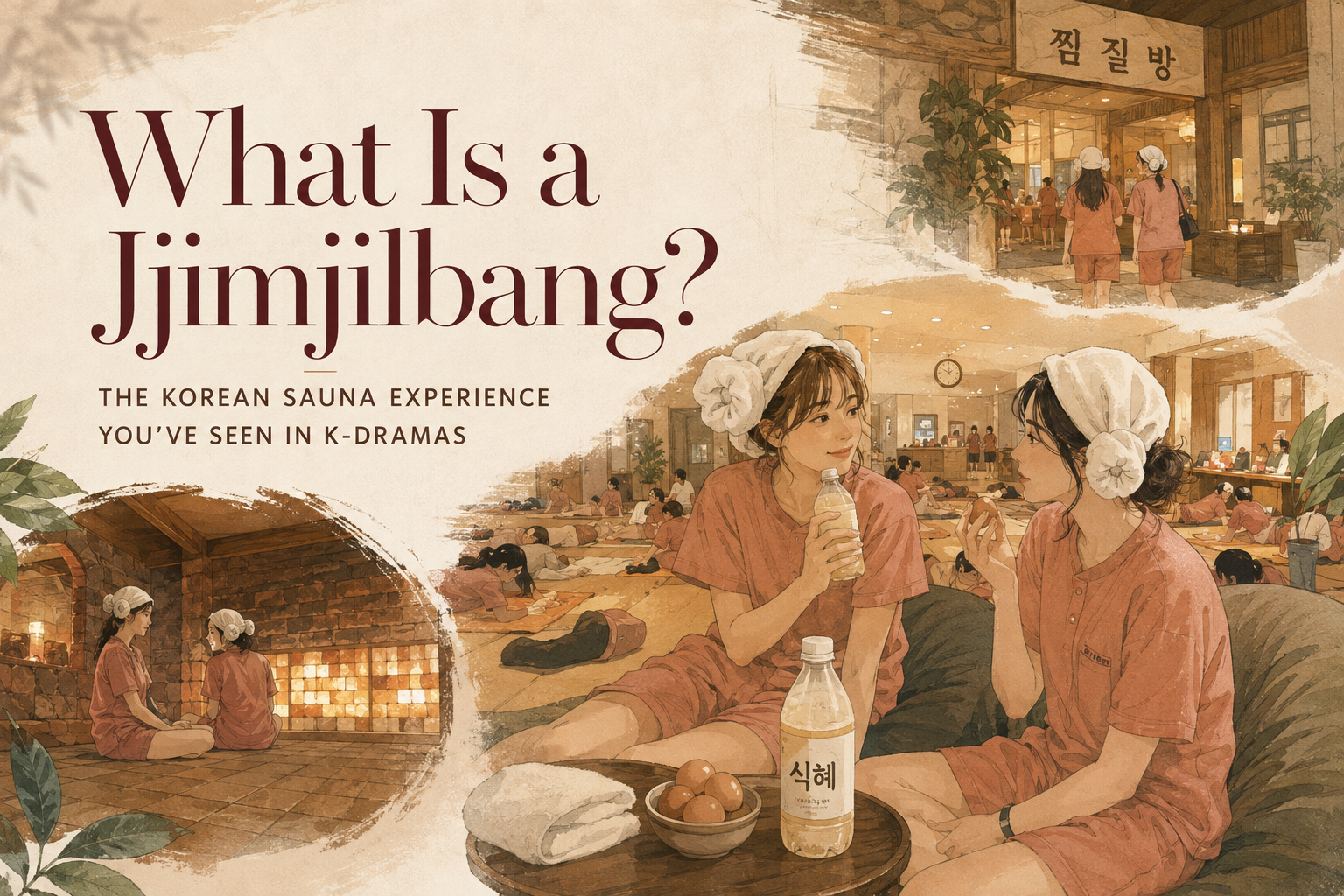
What is a jjimjilbang? Discover Korea’s unique sauna culture, from shared relaxation spaces and traditional snacks to bathing etiquette, overnight stays, and scenes in K-Dramas.
If you’ve watched K-Dramas, you may have noticed characters sitting in heated rooms wearing matching T-shirts and shorts, or relaxing with towels folded into sheep-ear shapes while eating roasted eggs.
These scenes take place in a jjimjilbang (찜질방), a traditional part of modern Korean leisure culture. It’s similar to a sauna, but there’s much more to do than simply sweat. Many jjimjilbangs combine bathing facilities, heated rooms, dining areas, and communal spaces where people can socialize or relax.
But why do visitors get completely undressed in some areas while wearing matching outfits in others? And can you really spend the night in a place where men and women share the same relaxation spaces?
What Is a Jjimjilbang? How Does a Korean Sauna Work?
A jjimjilbang is a Korean bathhouse and sauna complex where visitors can enjoy communal baths, heated rooms with different temperatures, and relaxation areas.
Not every Korean public bathhouse has a jjimjilbang, and facilities vary in size, layout, and available services.
For first-time visitors, the most important thing to understand is the difference between the bathing areas and the shared sauna spaces.
After paying the entrance fee, you’ll typically receive locker keys, towels, and a set of sauna clothes. You’ll first place your shoes in a designated locker before heading to the gender-separated changing rooms.
In the bathing area, visitors are expected to be completely undressed. Swimsuits aren’t worn in these traditional communal baths, and everyone must wash thoroughly before entering the shared soaking pools.
This may feel unfamiliar if you’re from a culture where public bathing usually involves wearing a swimsuit. However, these bathing areas are separated by gender, and nudity is treated as a normal part of the bathing experience.
The shared jjimjilbang areas work differently.
Here, visitors wear the provided T-shirt and shorts. Families, friends, and couples can spend time together in heated rooms or communal relaxation areas.
When I visited a jjimjilbang with my friends, one of the most enjoyable parts was exploring the different heated rooms and folding our towels into the famous sheep-head shapes.
Taking a break to drink sikhye and eat roasted eggs was another highlight.
For me, these small activities capture what makes a jjimjilbang different from an ordinary sauna. It’s not simply a place to sweat, but somewhere people can spend time together without needing to do very much at all.
Why Do Koreans Eat Eggs and Sleep at Jjimjilbangs?
Korea has a long history of communal bathing and traditional heated bathing practices, including hanjeung, which involves sweating in a heated space.
Modern jjimjilbangs combine these traditions with places to eat, rest, and socialize.
Japanese onsen are widely associated with bathing in hot spring water, while Finnish saunas are particularly known for their heated sauna rooms. Large Korean jjimjilbangs are distinctive in how they often bring bathing, food, and relaxation together in one facility.
Of course, bathing and sauna traditions vary considerably within each country.
Two of the most recognizable jjimjilbang snacks are sikhye (식혜) and maekbanseok gyeran (맥반석 계란).
Sikhye is a sweet Korean rice drink, often served chilled. It’s especially refreshing after spending time in a heated room.
Maekbanseok gyeran are eggs cooked with heat until they develop their characteristic brown color and firmer texture. They’re commonly sold as jjimjilbang snacks.
Another familiar sight is people lying side by side on the floor in large communal relaxation areas.
I remember being struck by how visitors simply found a comfortable spot and settled down to rest.
Some jjimjilbangs operate overnight, allowing guests to sleep in designated resting areas.
But there’s an important distinction: a jjimjilbang isn’t the same as a hotel.
Depending on the facility, there may be no beds or private rooms. You might be sleeping on a firm floor, surrounded by other guests, and occasionally hear conversations or snoring.
Not all Koreans spend the night at jjimjilbangs, either. Some people visit with friends or family for a few hours, enjoy the heated rooms and snacks, and then head home.
If you’re considering an overnight stay, check whether the facility operates 24 hours, charges additional nighttime fees, and provides a suitable sleeping area.
Jjimjilbang in K-Dramas vs. Reality: What Should Visitors Know?
In Episode 11 of Crash Landing on You (사랑의 불시착), a group of North Korean soldiers spends time at a jjimjilbang after arriving in Seoul.
The setting illustrates how a jjimjilbang can function as more than a bathing facility. It’s also a place where people can spend time together and temporarily settle in.
In real life, jjimjilbangs can be equally social. Friends might chat between sauna sessions, while families spend time relaxing in shared spaces.
However, not everything you see in K-Dramas is something every visitor does.
Take the famous sheep-head towel hat, known in Korean as yangmeori (양머리).
Although this playful towel style appears in dramas and is associated with jjimjilbang culture, not everyone wears one. Some visitors make them for fun, but they’re certainly not required.
Another detail that can surprise international visitors is the nudity in the bathing areas.
The key distinction is simple: traditional communal baths are generally gender-separated and used without clothing, while the shared relaxation and heated rooms are used in the provided sauna outfits.
There’s also a popular Korean bathhouse treatment worth knowing about: sesin (세신), or a Korean body scrub.
During a sesin treatment, a professional attendant exfoliates your skin, removing dead skin cells through a vigorous scrubbing process.
It’s usually performed in the bathing area and often costs extra on top of the general admission fee.
You don’t have to get a body scrub to enjoy a jjimjilbang, but it’s an option for visitors interested in experiencing a traditional Korean bathhouse service.
A few basic etiquette rules will also make your visit easier:
ㅇ Shower before entering the communal baths. Washing thoroughly is an essential part of Korean bathhouse etiquette.
ㅇ Don’t scrub your skin inside the soaking pools. Body scrubbing belongs in designated washing or treatment areas.
ㅇ Respect other visitors’ privacy. Don’t take photos or record videos of people in the bathing areas.
ㅇ Keep noise to a minimum in sleeping areas. Some guests may be resting even during the day.
Finally, remember that services differ between establishments. Meals, massages, body scrubs, and other facilities may have separate prices and operating hours.
Checking these details before visiting can help you avoid unexpected charges or disappointment.
Experiencing Everyday Korean Life at a Jjimjilbang
A jjimjilbang brings together Korean bathing traditions and everyday ways of relaxing.
The heated rooms are only one part of the experience. Sharing snacks, chatting with friends, and taking time to rest are just as much a part of the culture.
Trying the sheep-head towel and roasted eggs you’ve seen in K-Dramas can be fun, but the more interesting experience is discovering how a jjimjilbang fits into everyday Korean leisure.
If you’re traveling to Korea, consider visiting one for a few relaxing hours rather than thinking of it only as an inexpensive place to sleep.
It’s an opportunity to experience a familiar side of Korean life that goes beyond the scenes you see on screen.