What Does Saranghae Mean in Korean? More Than Just “I Love You”

What does Saranghae mean in Korean? Explore the Saranghae meaning, its different forms, and how Koreans express love through words, actions, and everyday care. Have you ever watched a K-Drama where a character hesitates for what feels like forever before finally saying “Saranghae”? Or perhaps you’ve heard K-Pop fans shouting “Saranghaeyo!” to their favorite idols. … Read more

Why Is Hangul So Special? The Story Behind Korea’s Alphabet

Why is the Hangul alphabet so special? Discover why King Sejong created it, how science and philosophy shaped its letters, and why it remains meaningful in modern Korea. In the heart of Seoul’s Gwanghwamun Square stands an enormous statue of King Sejong the Great, with Gyeongbokgung Palace in the background. If you ever visit Seoul, … Read more

What Is Aegyo? Why Do Koreans Act Cute in K-Dramas?

What is aegyo? Discover why K-Drama characters suddenly act cute and how Koreans express affection through playful voices, romantic gestures, and K-Pop fan interactions. What Is Aegyo? Is It Just About Acting Cute? If you watch K-Dramas, you may have noticed something interesting. A confident, serious female character suddenly raises her voice, pouts her lips, … Read more

What Does “Ajusshi” Mean in K-Dramas?

Have you ever wondered why some men in K-Dramas are called “Oppa” while others are called “Ajusshi”? Discover Ajusshi Meaning and how Korean terms of address reveal age, closeness, and emotions. From My Mister to The Man from Nowhere, learn why this simple word can express much more than “Mister” in English. Ajusshi Meaning: What Does Ajusshi Actually … Read more

Why Do Koreans Say “Ajumma”? The K-Drama Word Explained

Heard “ajumma” in a K-drama and wondered what it really means? Learn the Ajumma Meaning, why it can sound warm or rude, and when Koreans avoid using it. Ajumma Meaning: What Does “Ajumma” Actually Mean? If you watch K-dramas, you have probably heard someone call a market vendor, restaurant owner, neighbor, or middle-aged woman “ajumma!” … Read more

What Does “Fighting!” Mean in Korean? The K-Drama Phrase Explained

If you watch K-Dramas, you have probably heard Koreans shout “Fighting!” Learn the Fighting Meaning in Korean and why this English word became a popular Korean cheer. Fighting Meaning in Korean: Why Do Koreans Say “Fighting!”? If you watch K-Dramas, you have probably seen someone say “Fighting!” to a friend before an exam, a coworker before an … Read more

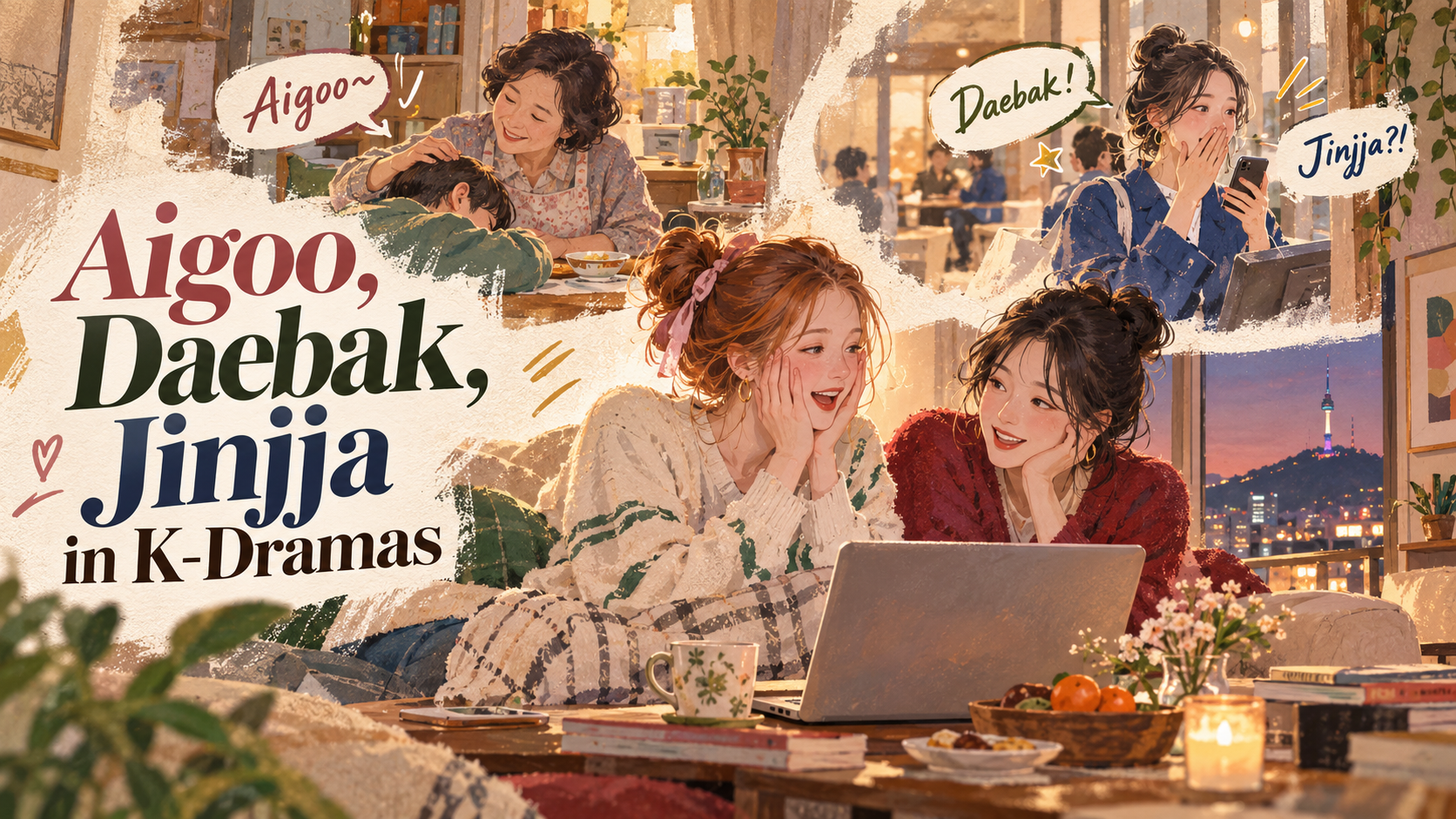
Aigoo, Daebak, Jinjja: What These K-Drama Words Really Mean

What do aigoo, daebak, and jinjja really mean? This guide to K-Drama Korean Words explains their emotions, tone, and cultural nuances that subtitles often miss. K-Drama Korean Words: Why Can “Aigoo” Mean So Many Things? If you watch K-dramas, you have probably heard characters of all ages say “aigoo” (아이고). English subtitles often translate it … Read more

What Do Unni, Noona, and Hyung Mean in K-Dramas?

What do Unni Noona Hyung really mean in K-Dramas? These Korean terms reveal age, gender, closeness, social distance, and even subtle changes in relationships. Why Do Koreans Use Unni, Noona, and Hyung for People Who Are Not Family? If you watch K-Dramas, some of the most confusing words you may hear are unni, noona, and hyung. What surprises many international … Read more

What Is Sunbae and Hoobae? Korean Hierarchy in K-Dramas

What do Sunbae and Hoobae mean in K-Dramas? Discover how senior-junior relationships work in Korean schools and workplaces, why age is not always the deciding factor, and how these relationships shape everyday Korean culture. Sunbae and Hoobae Are Decided by Who Came First, Not Simply by Age If you watch K-Dramas, you have probably heard … Read more

What Does ‘Oppa’ Mean in Every K-Drama?

If you watch K-Dramas, you have probably heard the Korean word “oppa” many times. The oppa meaning goes far beyond “older brother.” It can refer to a boyfriend, a close older male friend, or even a favorite celebrity. Here is what “oppa” really means and how Koreans use it in everyday life. Oppa Meaning: Is … Read more