Why Do Korean Couples Celebrate 100 Days? The K-Drama Dating Tradition Explained

If you watch K-Dramas, you may wonder why 100 days matters so much to couples. Discover the Korean 100 Day Anniversary, from couple rings and gifts to what this romantic milestone means in real Korean dating culture. Korean 100 Day Anniversary: Why Is 100 Days So Special? In Korea, it is quite common for couples … Read more


Why Do Koreans Say “Ajumma”? The K-Drama Word Explained

Heard “ajumma” in a K-drama and wondered what it really means? Learn the Ajumma Meaning, why it can sound warm or rude, and when Koreans avoid using it. Ajumma Meaning: What Does “Ajumma” Actually Mean? If you watch K-dramas, you have probably heard someone call a market vendor, restaurant owner, neighbor, or middle-aged woman “ajumma!” … Read more

What Does “Fighting!” Mean in Korean? The K-Drama Phrase Explained

If you watch K-Dramas, you have probably heard Koreans shout “Fighting!” Learn the Fighting Meaning in Korean and why this English word became a popular Korean cheer. Fighting Meaning in Korean: Why Do Koreans Say “Fighting!”? If you watch K-Dramas, you have probably seen someone say “Fighting!” to a friend before an exam, a coworker before an … Read more

What Was Nobi? The Real Story Behind Servants in Joseon K-Dramas

The servants you see in historical K-dramas were more than household workers. Discover Joseon Nobi, their hereditary status, daily lives, and how they differed from Western slavery. Joseon Nobi Were More Than Servants If you watch historical K-dramas, or sageuk, you have probably seen people serving food in a noble household, preparing horses, carrying messages, or … Read more

What Is a Pojangmacha? The Late-Night Drinking Tents You Always See in K-Dramas

Ever wondered about the red street tents in K-Dramas? Pojangmacha is a Korean night spot where people share simple food, drinks, and honest conversations. What Is a Pojangmacha? The Red Tent You See in K-Dramas If you watch Korean dramas, you have probably seen this scene before: an exhausted office worker sits alone with a … Read more

Aigoo, Daebak, Jinjja: What These K-Drama Words Really Mean

What do aigoo, daebak, and jinjja really mean? This guide to K-Drama Korean Words explains their emotions, tone, and cultural nuances that subtitles often miss. K-Drama Korean Words: Why Can “Aigoo” Mean So Many Things? If you watch K-dramas, you have probably heard characters of all ages say “aigoo” (아이고). English subtitles often translate it … Read more

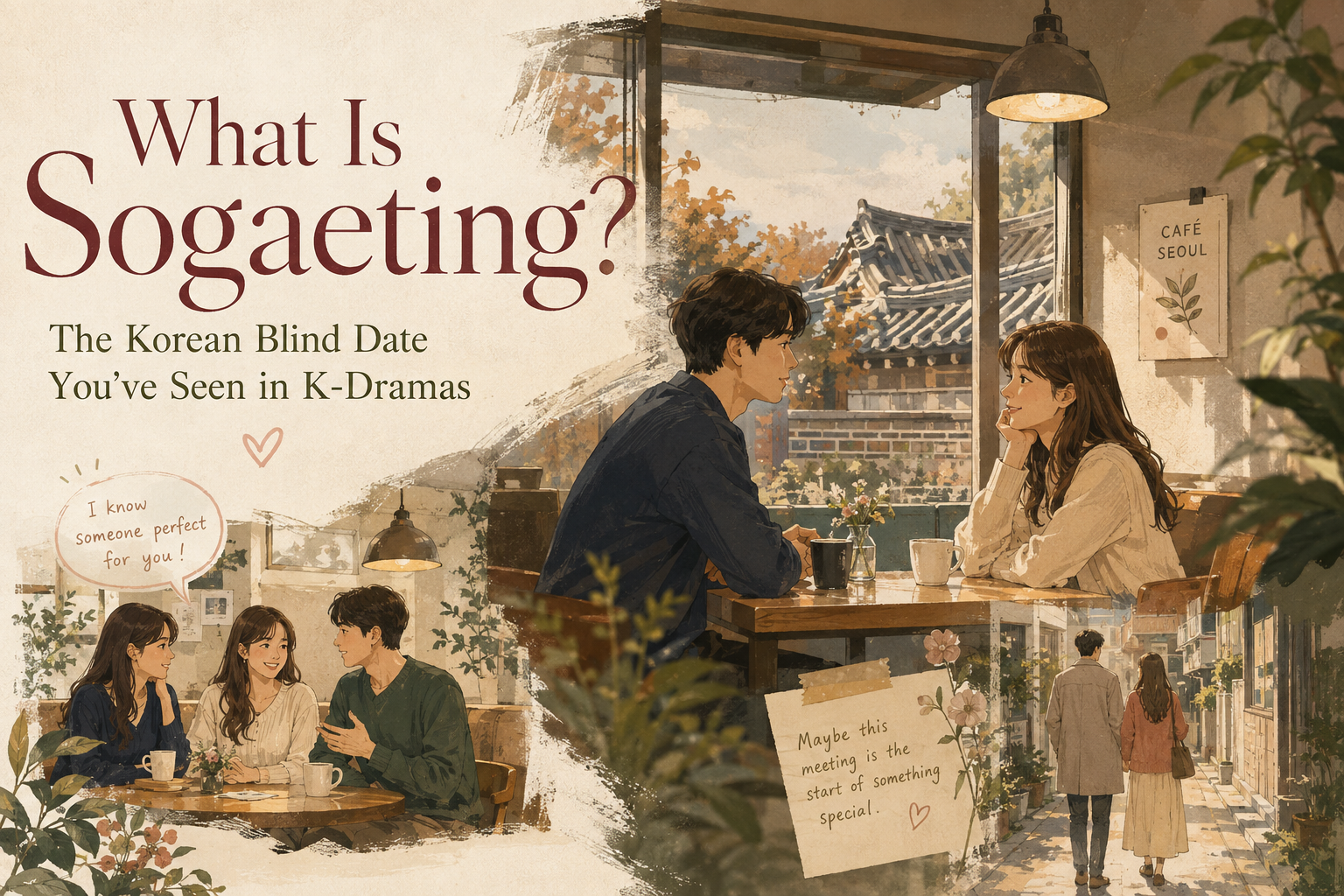
What Is Sogaeting? The Korean Blind Date You’ve Seen in K-Dramas

Sogaeting, or a Korean blind date, is a popular way for young Koreans to meet potential partners. Discover how friends arrange dates, how romance develops, and why this unique dating tradition often appears in K-Dramas. What Is Sogaeting? Understanding the Korean Blind Date If you enjoy K-Dramas, you may have seen scenes where two people … Read more

Why Do Koreans Say “Our” When They Mean “Mine”?

Why do Koreans say “our mom” instead of “my mom”? Explore the Korean word uri, its cultural roots, everyday expressions, and meaning in K-Dramas. Why Do Koreans Say “Our” Instead of “My”? If you are learning Korean or watching K-Dramas, you may have noticed something unusual: Koreans often say uri (우리), meaning “our,” even when talking about … Read more

Korean Company Dinners: What’s the Big Deal?

Why do K-Drama office workers spend so much time at company dinners? Discover the history of Korean company dinners, how they compare with after-work gatherings in the US and Europe, and how younger generations and COVID-19 have changed this workplace tradition. Why Are Korean Company Dinners Such a Big Deal in K-Dramas? If you watch … Read more

The Gwageo Exam : That Could Change Your Life in Joseon Korea

The Gwageo exam was more than a civil service exam in Joseon Korea. It offered a path to government office, social recognition, and family honor. Discover how this challenging exam worked and why it still appears in K-dramas today. Why Was the Gwageo So Important? During the Joseon Dynasty (1392–1897), passing the Gwageo was one … Read more