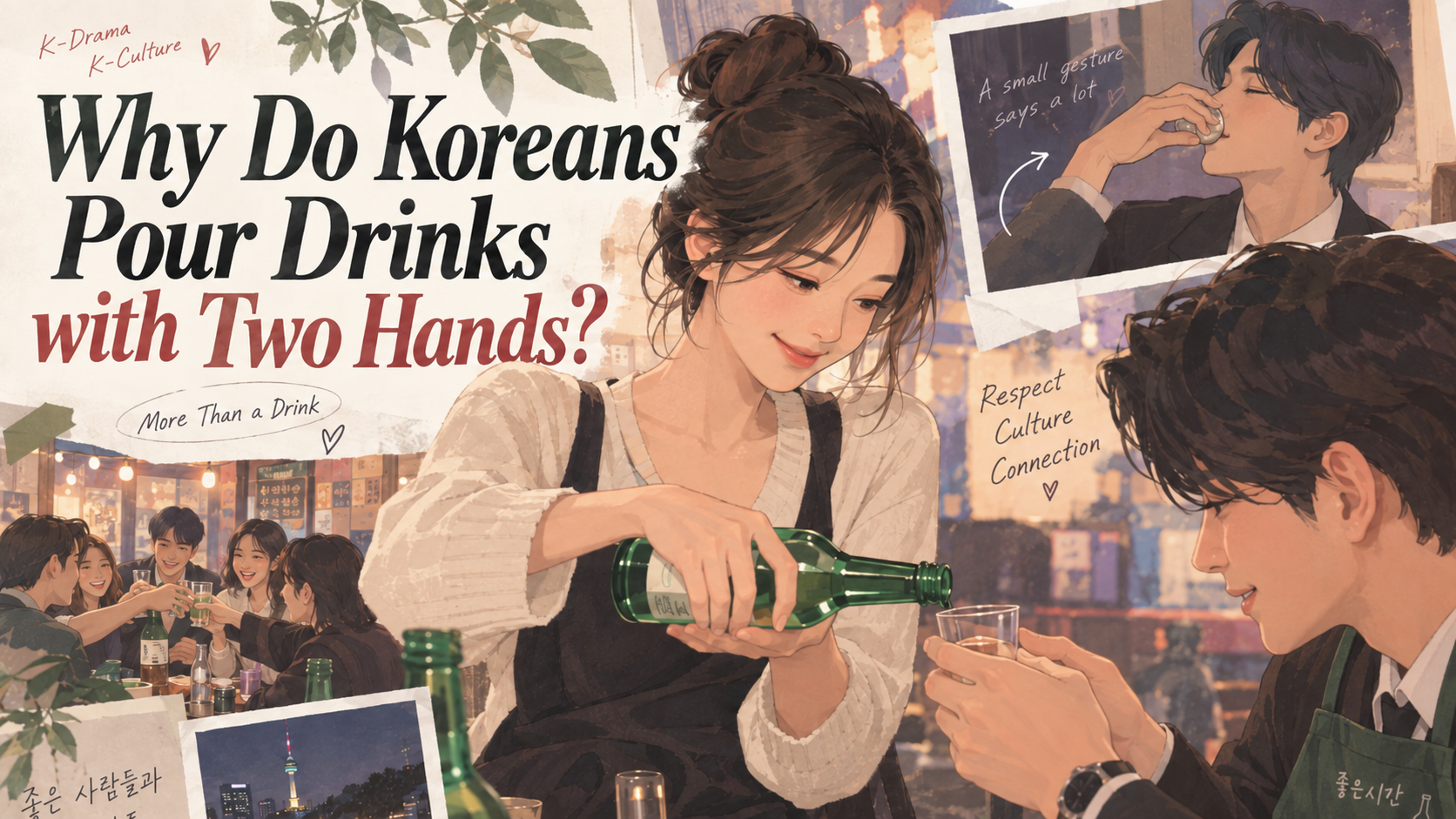
Why do Koreans pour and receive drinks with two hands in K-Dramas? Discover how Korean drinking culture reflects age, hierarchy, respect, and real-life drinking etiquette in Korea.
Why Do Koreans Pour and Receive Drinks with Two Hands?
If you watch office dinners or drinking scenes in K-Dramas, you may notice something unusual. A younger person often pours alcohol for an older person using both hands, and when receiving a glass, they may also use both hands.
In Korea, this is not simply a practical way to avoid spilling a drink. It is a gesture of respect, especially toward someone who is older or holds a higher position at work.
In Korean society, people may change not only the way they speak but also the way they behave depending on age and relationship. This is clearly visible in Korean drinking culture.
When pouring a drink for a senior colleague or someone you have just met, you may hold the bottle with one hand while supporting your arm or the bottle with the other. When receiving a drink, using both hands is also considered polite.
By contrast, if two people casually pour and receive drinks with one hand, it can suggest that they are already very close and comfortable with each other.
Korean Drinking Culture and the Etiquette Known as Judo
Traditional drinking etiquette in Korea is sometimes called judo (주도, 酒道), which literally refers to the proper way or manners of drinking.
Under Korea’s youth protection rules, people are no longer treated as minors for alcohol-purchase restrictions from January 1 of the year in which they turn 19. In practice, however, many Koreans begin learning drinking etiquette after finishing high school, often from family members, university seniors, coworkers, or older acquaintances.
I also learned many of these customs naturally from senior colleagues after I started working. I would pour drinks for them with two hands and receive my own glass with two hands as well. Even when people know each other well, they may still use both hands if one person is older.
After receiving a drink from a senior, some people do not immediately place the glass back on the table. They may first bring it briefly to their lips. When drinking in front of an older person, they may also turn their head or upper body slightly to the side.
These gestures show that Korean drinking culture is often about more than alcohol itself. It also reflects the relationship between the people sharing the table.
In many Western settings, pouring your own drink may feel completely natural. In Korea, however, noticing another person’s empty glass and pouring for them can itself become a small expression of attention and social connection.
Korean Drinking Culture in K-Drama Drinking Scenes
This is why a drinking scene in a K-Drama can reveal much more than what the characters are eating or drinking.
Imagine a new employee pouring alcohol for a manager with two hands and then receiving a glass in the same way. Without any explanation, Korean viewers can immediately understand that there is an age or workplace hierarchy between the two characters.
Turning the head slightly while taking a drink can also signal respect toward the older person sitting nearby.
The opposite can be equally meaningful. Two characters may begin a drama by carefully pouring drinks for each other with both hands. Later, as they become closer, they may start pouring more casually with one hand or naturally refill each other’s glasses without thinking about formal manners.
That small change can quietly show that their relationship has become more comfortable.
American or European television dramas may often express growing intimacy through dialogue, physical affection, or direct emotional conversations. K-Dramas can communicate similar changes through much smaller gestures. A glass of soju, the position of someone’s hands, or the way a character turns away while drinking can reveal how two people see each other.
A Drinking Glass Can Reveal Korean Relationships
When you see a character in a K-Drama pouring alcohol with two hands, it is not just an unusual drinking habit.
The gesture can reflect age, workplace rank, intimacy, and respect. That is why understanding Korean drinking culture can make many K-Drama dinner and drinking scenes easier to read.
In Korea, drinking etiquette is often less about how much alcohol someone drinks and more about who is sitting across the table and what kind of relationship they share.
So the next time you watch a K-Drama office dinner, pay attention not only to the soju bottle but also to the characters’ hands.
A character pouring a drink with two hands may be telling you something about the relationship before either person says a word.
Note from Rebecca:
Have a question about K-Dramas or Korean culture? Feel free to leave a comment below!